
Green Lipped Mussel for Dogs: Benefits, Dosage & What to Look For

If your dog is slowing down — taking the stairs more carefully, hesitating before jumping on the couch, or lagging behind on walks — you've probably been searching for something that actually helps.
Green lipped mussel oil is one of the most well-researched natural options for joint support in dogs. And if you've ever heard of it, you may have noticed: it's also what a lot of dog owners discovered after using it themselves.
Here's what you need to know about green lipped mussel for dogs — the benefits, the right form, the correct dosage, and what separates a quality supplement from a cheap one.
WHAT IS GREEN LIPPED MUSSEL?
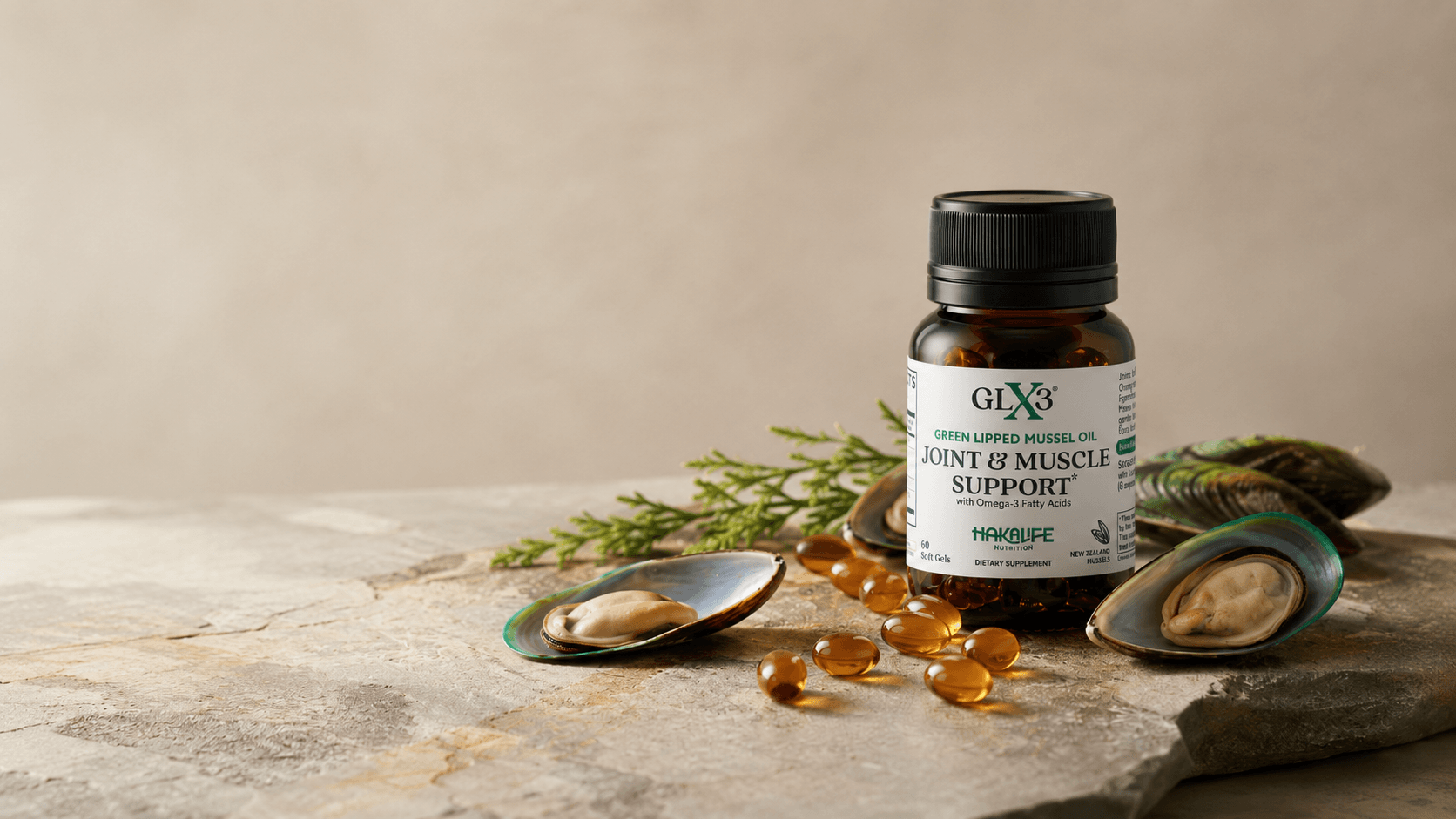
Green lipped mussel (Perna canaliculus) is a shellfish native to New Zealand. It's named for the distinctive green edge around its shell.
What makes it interesting isn't the mussel itself — it's the oil inside it. Green lipped mussel oil contains a unique combination of omega-3 fatty acids not found in fish oil, including ETA (eicosatetraenoic acid), which is the subject of ongoing research for its role in supporting joint comfort and healthy inflammatory response.*
The oil is extracted from the mussels using a cold CO₂ process that preserves the full fatty acid profile. This is different from freeze-dried green lipped mussel powder, which loses much of the active oil fraction during processing. If you're comparing products, look for "green lipped mussel oil" — not powder or extract. For a deeper breakdown, see our comparison of green lipped mussel oil vs. freeze-dried powder.
BENEFITS OF GREEN LIPPED MUSSEL OIL FOR DOGS
Green lipped mussel oil supports:
Joint comfort and mobility* — especially relevant for dogs dealing with stiffness, reduced activity, or age-related joint changes A healthy inflammatory response* — the ETA fatty acids are believed to support the body's natural regulatory processes Coat and skin health* — the omega-3 fatty acids contribute to a healthy coat and skin Overall omega-3 nutrition* — especially useful as an alternative to fish oil, which is more commonly used but contains a different fatty acid profile
*These statements have not been evaluated by the U.S. Food and Drug Administration. This product is not intended to diagnose, treat, cure, or prevent any disease.
HOW MUCH GREEN LIPPED MUSSEL OIL SHOULD I GIVE MY DOG?
Dosage varies by product concentration and your dog's size. As a general starting point:
Small dogs (under 20 lbs): 1 soft gel per day Medium dogs (20–50 lbs): 1–2 soft gels per day Large dogs (50+ lbs): 2 soft gels per day
Start at the lower end and observe your dog over the first 2–4 weeks. Many owners notice initial changes in activity and comfort within the first 2–3 weeks in dogs, though full benefits typically develop over 6–8 weeks of consistent use.
Always consult your veterinarian before adding any supplement to your dog's routine — particularly if your dog takes other medications or has a known health condition.
GLX3 for Pets — The Same Quality, Made for Dogs
CO₂-extracted New Zealand Green Lipped Mussel Oil. Human-grade quality. No artificial ingredients. Easy soft gel — give with food or squeeze over a meal.
See GLX3 for Pets →IS GREEN LIPPED MUSSEL OIL SAFE FOR DOGS?
For most dogs, yes. Green lipped mussel oil is generally well tolerated. The most commonly reported side effect is mild digestive upset when first introducing the supplement — this usually resolves within a few days. For a full overview, see our guide on the side effects of green lipped mussel for dogs.
Important: green lipped mussel contains shellfish. If your dog has a known shellfish allergy, consult your vet before use.
OIL vs. POWDER: WHAT'S THE DIFFERENCE?
You'll see two main forms of green lipped mussel supplements for dogs: oil (soft gels) and powder (capsules or loose).
The oil form — specifically CO₂-extracted green lipped mussel oil — retains the full omega-3 fatty acid profile, including ETA. The freeze-dried powder form is more shelf-stable but loses a significant portion of the active oil fraction during processing. Learn more in our full green lipped mussel oil vs. freeze-dried powder comparison.
If joint support is the goal, oil is the better choice. Look for products where "green lipped mussel oil" is the labeled ingredient, and check that it specifies CO₂ or cold extraction — not simply "extract" or "powder."
WHAT TO LOOK FOR IN A GREEN LIPPED MUSSEL SUPPLEMENT FOR DOGS
Not all products are equal. Here's what matters:
✓ Form: Look for green lipped mussel oil (not powder) — it preserves more of the active fatty acid profile ✓ Extraction method: CO₂ or cold-pressed — not heat-processed ✓ Source: New Zealand is the only commercial source of green lipped mussel — any quality product will specify this ✓ Additives: Fewer is better. The best products contain mussel oil plus a natural stabilizer (like olive oil and vitamin E) — nothing else ✓ Soft gel format: Easy to administer for most dogs — can be given with food or punctured and squeezed over a meal
A NOTE FROM HAKA LIFE
GLX3 for Pets uses the same CO₂-extracted New Zealand Green Lipped Mussel Oil as our human formula — no compromise on quality. Three simple ingredients: mussel oil, cold-pressed olive oil, and vitamin E.
Many of our customers started with GLX3 for their dog — and discovered the same benefits for themselves. Read Walter Thompson's story as one example of that connection. The connection runs both ways.
If you have questions about whether GLX3 for Pets is right for your dog, reach out to us directly. We're happy to help.
These statements have not been evaluated by the U.S. Food and Drug Administration. This product is not intended to diagnose, treat, cure, or prevent any disease.
See what GLX3 can do for you.
Try GLX3 — 90 Days, Risk-Free
SHOP NOWFree shipping on orders over $50 · 90-day money-back guarantee
DON'T MISS | Most Popular

*These statements have not been evaluated by the Food and Drug Administration. This product is not intended to diagnose, treat, cure, or prevent any disease. References to COX/LOX pathway support, joint comfort, and mobility reflect the ingredient's role in supporting the body's natural inflammatory response as part of a healthy lifestyle — not clinical outcomes. Individual results may vary.

