
ANDI Scores: The Simplest Way to Start Eating Anti-Inflammatory
Food is one of the most powerful levers you have when it comes to inflammation. It is also one of the most confusing. Every week there is a new list of "10 foods you must eat" and "5 foods you must never touch," and half of them contradict each other.
So here is a tool that cuts through the noise. It is called the ANDI score, and once you understand it, grocery shopping gets a whole lot simpler.
What Is an ANDI Score?
ANDI stands for Aggregate Nutrient Density Index. It was developed by Dr. Joel Fuhrman, and the idea is refreshingly simple: rank foods by how many nutrients they deliver per calorie.
The scale runs from 1 to 1,000. A food gets points for vitamins, minerals, fiber, and antioxidants, then that total is divided by calories. Foods that pack the most nutrition into the fewest calories land near the top. Foods that are mostly empty calories land near the bottom.
Dr. Fuhrman boils it down to a formula he calls H = N / C. Health equals nutrients divided by calories.
That is the whole system. No macros to count, no elimination phases, no apps. Just a number that tells you how hard a food is working for you.
Why ANDI Scores Matter for Anti-Inflammatory Eating
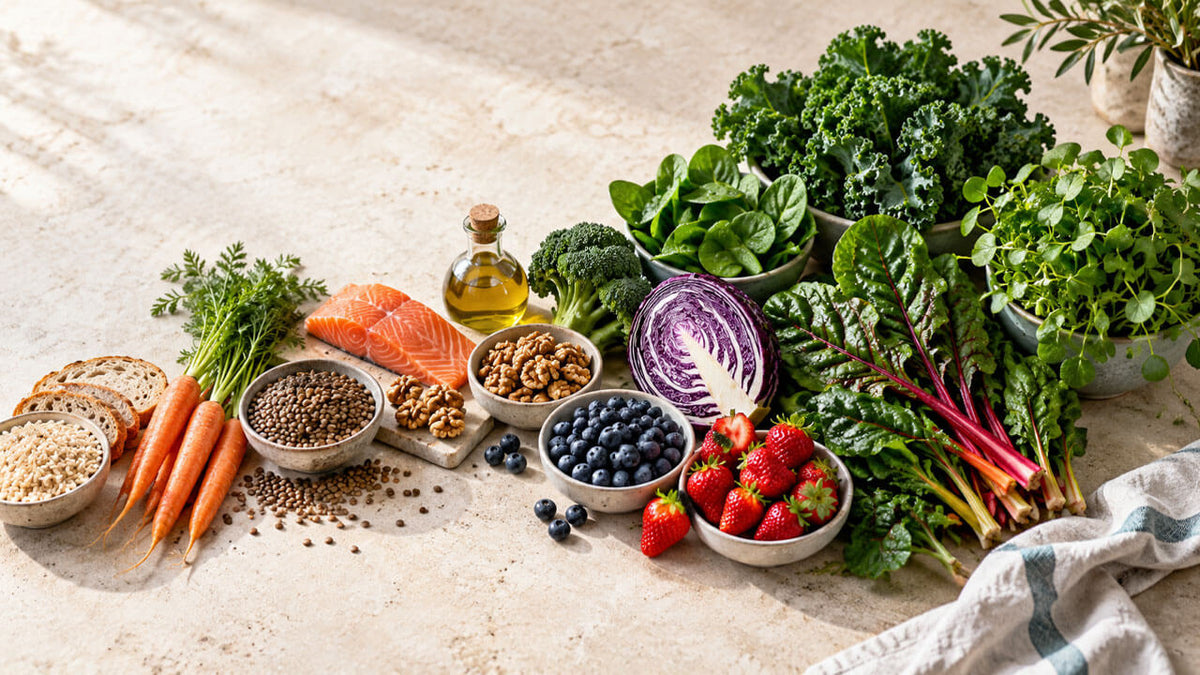
Here is the connection most articles miss. ANDI does not measure inflammation directly. What it measures is nutrient density, and the foods that score highest happen to be the exact foods that show up in nearly every anti-inflammatory eating pattern out there - leafy greens, cruciferous vegetables, deeply colored produce, and berries.
Those foods are rich in the antioxidants and phytonutrients your body leans on to keep its inflammatory response in balance. Meanwhile, the foods at the bottom of the ANDI list (refined flour, sugar, fried foods) are the ones most people are told to cut back on for the same reason.
So while ANDI was not built as an "anti-inflammatory index," in practice it functions like one. If you simply push your plate toward higher ANDI scores, you end up eating anti-inflammatory without having to think about it.
The ANDI Food List: Top Scores to Know
Scores vary slightly depending on which version of the chart you look at, but the rankings hold steady. Here are the numbers most people reference.
| Tier | Food | ANDI Score |
|---|---|---|
| The 1,000 Club Leafy greens |
Kale | 1,000 |
| Collard greens | 1,000 | |
| Mustard greens | 1,000 | |
| Watercress | 1,000 | |
| Swiss chard | 895 | |
| Bok choy | 865 | |
| Spinach | 707 | |
| Arugula | 604 | |
| Romaine | 510 | |
| 300 to 500 Cruciferous and colorful vegetables |
Brussels sprouts | 490 |
| Carrots | 458 | |
| Cabbage | 434 | |
| Broccoli | 340 | |
| Cauliflower | 315 | |
| Bell peppers | 265 | |
| 100 to 250 Fruits, mushrooms, and the good middle |
Mushrooms | 238 |
| Asparagus | 205 | |
| Tomatoes | 186 | |
| Strawberries | 182 | |
| Sweet potato | 181 | |
| Blueberries | 132 | |
| Pomegranate | 119 | |
| Onions | 109 | |
| Flax seeds | 103 | |
| 50 to 100 Beans, seeds, and whole foods with more calories |
Lentils | 72 |
| Sunflower seeds | 64 | |
| Kidney beans | 64 | |
| Apples | 53 | |
| Under 50 Proteins, healthy fats, and grains |
Salmon | 34 |
| Eggs | 31 | |
| Walnuts | 30 | |
| Almonds | 28 | |
| Avocado | 28 | |
| Brown rice | 28 | |
| Chicken breast | 24 | |
| Olive oil | 10 | |
| The bottom of the chart | White bread | 9 |
| Corn chips | 7 | |
| Cola | 1 |
Take a second look at that list. Nine of the top ten are greens. That is not a coincidence, and it tells you exactly where to start.
The One Thing ANDI Gets Wrong (and Why It Matters for Your Joints)
Notice where salmon, walnuts, avocado, and olive oil landed. Down near white potatoes. Below a cucumber.
That is not because those foods are bad for you. It is because ANDI divides by calories, and healthy fats are calorie dense by nature. A tablespoon of olive oil carries 120 calories, so no matter how good those fats are, the math pushes it to the bottom of the chart.
This is the biggest blind spot in the ANDI system, and Dr. Fuhrman himself acknowledges that scores should guide the bulk of your plate, not dictate every bite. Your body still needs those fats. In particular, it needs omega-3 fatty acids, which are almost invisible on an ANDI chart because every good source of them is calorie dense.
For anyone thinking about joint comfort and a healthy inflammatory response, omega-3s are not optional. They are the piece of the puzzle ANDI cannot show you.
How to Actually Use ANDI Scores (Without Overhauling Your Life)
Nobody needs to eat 1.5 cups of cooked kale three times a day. Here is how we think about it at Haka Life.
1. Aim for one 500+ food at every meal
A handful of spinach in your eggs. A side of roasted Brussels sprouts at dinner. Romaine instead of iceberg. That single habit moves your average ANDI score dramatically.
2. Make the easy swaps
- Iceberg lettuce (127) to romaine (510) or arugula (604)
- White rice to a bed of sauteed cabbage (434) or cauliflower rice (315)
- Chips to sliced bell peppers (265) with hummus
- Fruit juice to a bowl of strawberries (182) or blueberries (132)
- White bread (9) to a lettuce wrap or collard green wrap (1,000)
3. Do not skip the fats just because they score low
Add the salmon. Use the olive oil. Grab a handful of walnuts. Then let the greens fill the rest of the plate.
4. Think in colors, not calories
Dark green, deep red, purple, orange. If your plate looks like a paint palette, your ANDI average is doing fine.
A Sample High-ANDI Day
Breakfast: Two eggs scrambled with a big handful of spinach and sauteed onion, plus a side of strawberries.
Lunch: Arugula and romaine salad with grilled salmon, cherry tomatoes, shredded carrots, sunflower seeds, and an olive oil vinaigrette.
Snack: Sliced bell peppers and cucumber with hummus.
Dinner: Roasted Brussels sprouts and sweet potato with lentils, finished with a squeeze of lemon and a drizzle of olive oil.
Nothing exotic. Nothing you cannot find at a regular grocery store. But nearly every item is pulling weight on the ANDI chart, and the fats are covered too.
Where GLX3 Fits In
We built GLX3 for exactly the gap ANDI leaves open.
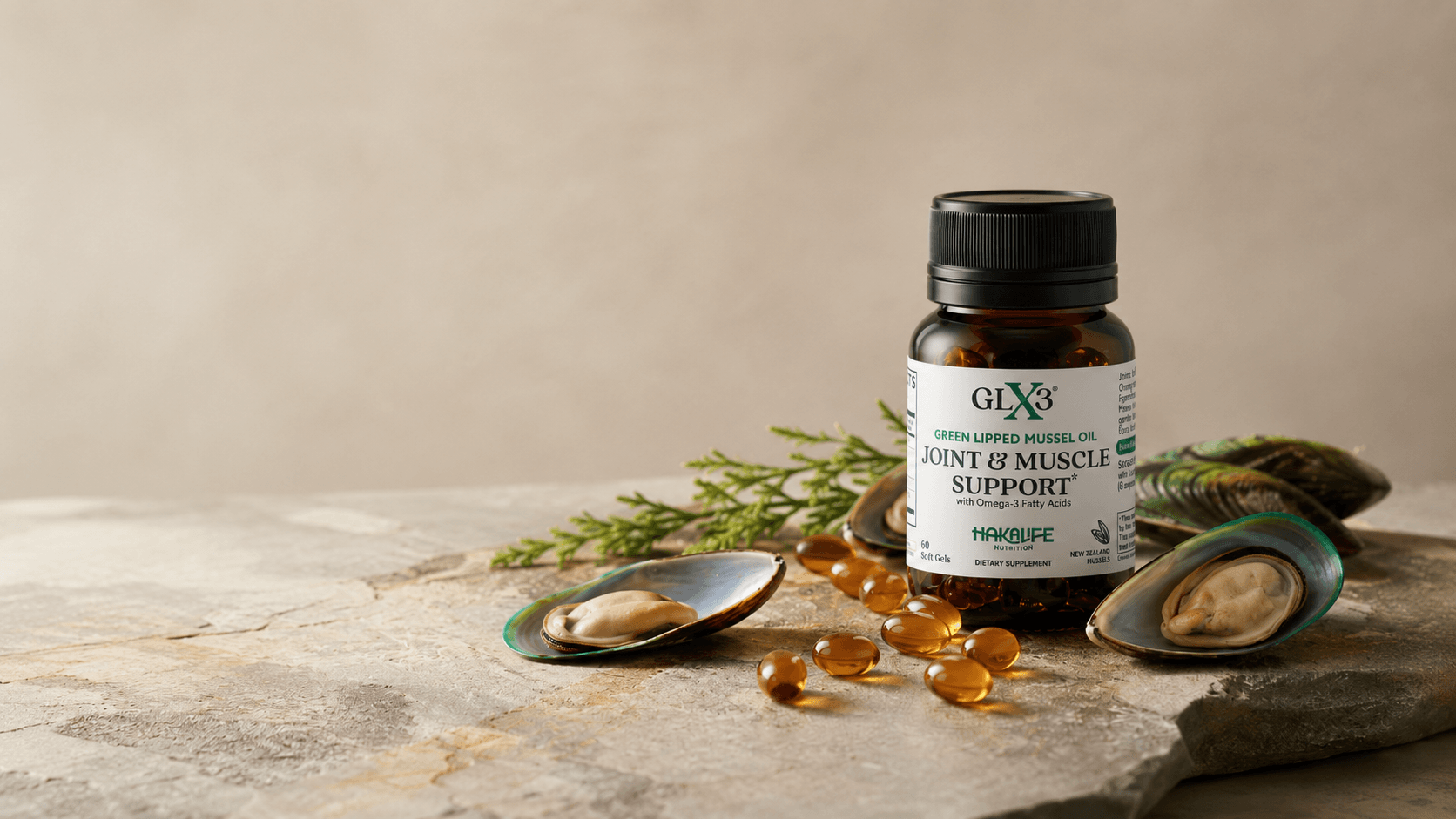
GLX3 is New Zealand green lipped mussel oil, one of the richest natural sources of a rare omega-3 called ETA (eicosatetraenoic acid) that you will not find in fish oil, flax, or walnuts. It is blended with cold-pressed olive oil and natural vitamin E in a small softgel, so you get the omega-3 support your plate may be missing without a single fish burp.
Over 150,000 customers have made GLX3 part of their daily routine to support joint comfort and a healthy inflammatory response. Most people notice their first small shifts somewhere in the 6 to 12 week range, which is why we recommend 4 softgels a day with meals to start, then tapering to 2 a day for maintenance once you feel those shifts.
Pile the greens high. Let GLX3 handle the omega-3s. That is about as simple as anti-inflammatory eating gets.
Try GLX3 - Backed by Our 90-Day Guarantee
Frequently Asked Questions About ANDI Scores
What does ANDI stand for?
ANDI stands for Aggregate Nutrient Density Index. It is a scoring system created by Dr. Joel Fuhrman that ranks foods from 1 to 1,000 based on nutrients per calorie.
What foods have the highest ANDI score?
Kale, collard greens, mustard greens, and watercress all score a perfect 1,000. Swiss chard, bok choy, spinach, and arugula follow close behind.
Are ANDI scores the same as anti-inflammatory scores?
Not exactly. ANDI measures nutrient density, not inflammation. But the highest-scoring foods are the same leafy greens, cruciferous vegetables, and berries found in most anti-inflammatory eating patterns, so the two overlap heavily in practice.
Why does salmon have a low ANDI score if it is healthy?
Because ANDI divides nutrients by calories, and salmon is calorie dense. The score does not capture omega-3 fatty acids well, which is why healthy fats should still be part of your plate even though they rank low.
Is a low ANDI score food bad for you?
Not necessarily. Olive oil, avocado, nuts, and salmon all score low but are widely considered healthy. ANDI is best used to guide the bulk of your plate toward greens and vegetables, not to eliminate every low-scoring food.
Can a supplement replace high ANDI foods?
No. Whole foods should always come first. Supplements like GLX3 are meant to fill specific gaps, such as omega-3s, that are hard to cover through nutrient-dense eating alone.
See what GLX3 can do for you.
Try GLX3 — 90 Days, Risk-Free
SHOP NOWFree shipping on orders over $50 · 90-day money-back guarantee
DON'T MISS | Most Popular

*These statements have not been evaluated by the Food and Drug Administration. This product is not intended to diagnose, treat, cure, or prevent any disease. References to COX/LOX pathway support, joint comfort, and mobility reflect the ingredient's role in supporting the body's natural inflammatory response as part of a healthy lifestyle — not clinical outcomes. Individual results may vary.

